Coaching or mentoring?

This past Friday, I had the privilege of participating in an internal discussion panel organised by my company (thanks, Sonia!), with the theme "coaching & mentoring at all levels". It was a really interesting conversation: two other colleagues shared their vast experience around the topic of mentoring, and I contributed with my point of view from the field of coaching.

The words coaching and mentoring are often used together, especially when talking about work and the enterprise, and sometimes, it´s not too clear what each of them is; that´s why we started by explaining the differences.
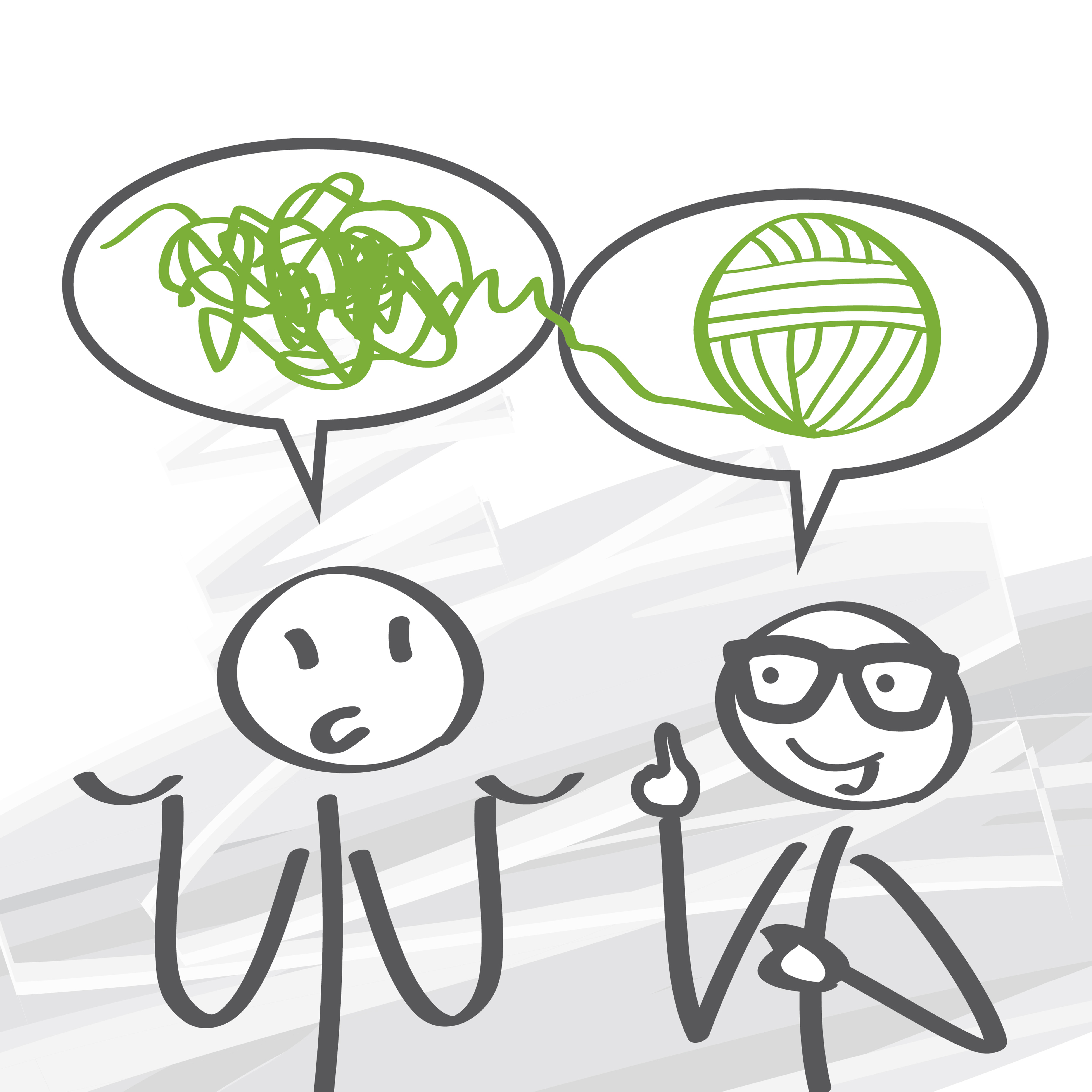
  • A mentor is someone with experience and a reputation in a particular profession, job role or field of work. They are further along the path the mentee is now beginning to walk, and with the years, they have become a subject matter expert, so they can guide the mentee and give them advice, sharing their knowledge, experience and wisdom.
  • Mentorships often extend over time, eventually becoming a long-term relationship. Typically, the mentor has a more senior position than the mentee, so there´s an element of hierarchy in the relationship. The usual topics of discussion are either relevant to their shared profession or related to career growth, navigating the workplace, networking, etc.
  • In contrast, a coach isn´t necessarily knowledgeable in the coachee´s professional field; a coach is someone who has received formal coaching training and has experience and a reputation in coaching, having become an expert in accompanying their clients in the process of defining their own objectives and finding their own answers and solutions.
  • The relationship between coach and coachee is one of partnership, not hierarchy, and the topics of discussion are chosen by the coachee according to what they consider most important and relevant along the process. Typically, each coaching engagement relates to a specific goal or objective and has a well-defined beginning and end. The duration of the engagement is variable, from a few weeks to several months.

And this brings us to what in my opinion is the fundamental difference between coaching and mentoring: while your mentor guides you and gives you advice, the coach´s job is not to give advice, they´re not going to tell you what to do.

In coaching, it´s all based on firmly believing that the coachee is a creative and resourceful person who already has (or can obtain) all the resources they need to be able to achieve their goals and overcome the challenges in front of them. It´s the coachee who´s an expert in their own life and, deep down, knows what they want, what is best for them and what works best for their particular case. Therefore, the coach´s job is to create an environment of trust and safety to encourage the coachee to be curious, explore, and open up to new possibilities, allowing the answers to bubble up to the surface.

As you can see, there are quite a few differences between these two disciplines, though it makes sense to mention them together when discussing professional development, as they complement each other perfectly in that field. Your mentor inspires you with their example and shares their expertise and practical wisdom with you; a coach serves as your mirror, your sounding board, and helps you to look inward and decide your next steps by following your own compass.. Needless to say, none of them is going to do the work for you; that´s impossible. It´s still your journey, your career, your life, and it´s up to you to do your part to make the most of it.

So what do you think? What do you need at this moment of your life? Mentoring? Coaching? Or maybe both?

(If you found this article interesting, you may also like this other one, where I explain the difference between coaching and psychotherapy)

Untranslatable words: overwhelm

Today we´re resuming the category of untranslatable words and phrases, dedicated to interesting terms that are difficult to translate from Spanish into English and vice-versa, with a concept that´s very close to my heart: overwhelm, which could be translated into Spanish as "la sensación de sentirse abrumado o sobrepasado".

Well, technically, this is only untranslatable in relative terms, given that we do have a direct translation for the verb and the adjective; what´s difficult to convey is the feeling itself, mostly because that word is missing in Spanish:

  • To overwhelm = abrumar
  • Overwhelmed = abrumado
  • Overwhelming = abrumador
  • A feeling of overwhelm = ???

The answer given by the Spanish Language Royal Academy seems to be that both "abrumamiento" and "abrumación" are somewhat used as nouns related to "overwhelming" (meaning "act and effect of overwhelming or being overwhelmed"); even though well constructed and valid, they´re not consolidated words, and therefore, they´re not present in the Spanish Dictionary..

To me, both "abrumamiento" and "abrumación" sound horrible, so, even if it takes longer to say it, I´m going to keep referring to it as the feeling of being overwhelmed ("sentirse abrumado")...

So, why am I talking about this topic today? Because this week, to be honest, I´ve been feeling a bit overwhelmed coming back from vacation: getting back to work, the house, the girls, etc., etc., etc. Does this ring a bell? Have you ever felt this way?

Photo of a person lying on the floor. Only the legs are visible, the rest is covered by a pile of cardboard boxes of different sizes

Luckily, I was able to identify how revved up I was early on, so I was able to slow down a bit, pause to take stock and then begin to take things in differently, partly thanks to a mindfulness course I started precisely this week (thanks Fernando!), and partly because I know myself and this is not the first time this happens to me... I often feel under pressure trying to do everything and then realizing I can´t.

Interestingly, I hadn´t really named that sensation until this morning when (by coincidence?) I listened to a podcast by Owen Fitzpatrick who was explaining the psychology behind it: the psychology of overwhelm. If you can (it´s in English), I recommend listening to the whole podcast (or rather two, the first part and the second part); for the moment, here´s the main idea, for starters:

Overwhelm happens when we feel like we have to do more than what we can do..

It makes sense, doesn´t it? It´s one of those moments when everything piles up for us: so much to do and so little time... And what happens, usually? One of two things: either we try to do more things faster and end up running around like a headless chicken, or we collapse and become unable to do anything, not knowing where to start.

If we analyze the sentence above, we can see two different aspects being compared: what we believe we have to do and what we can realistically do. The to-do list in our head is always longer, way longer, than what can be done in a day, a week, a month, a year or even a lifetime. Owen explains that the majority of people focus mostly on the second part of the sentence, looking for ways to be able to do more, when the key is also on the first part: do we really need to do it all?

Te podcast proposes a specific technique to manage tasks, and as I was listening to it, my mind immediately found the parallel with how workload is managed within my work environment. For a software development team, the tasks list is also potentially infinite: new features to implement, bugs to fix, application upgrades... Let´s see what steps are involved, and how my team at work handles it (using Scrumas an Agile methodology, and Jira as a tool):

  • Write down all tasks, absolutely everything. This doesn´t mean they´re all going to get done; what we want is to get them together in a place that´s outside our heads. In Scrum each task is represented by a story, and they all get listed in the backlog.
  • Sort them into different categories, so that they can be better organized. In Scrum, a set of related stories constitutes an epic, a work unit that once finished, delivers some specific value or benefit.
  • Break them into manageable chunks, if needed, so that they´re easier to handle. This is done through a refinement process, getting specific about what needs to be done for each task. It´s also important to estimate the time and effort involved for each one.
  • Analyze them and connect them to your main goals, what specific objective is each task counting towards? And to what extent? In a professional environment, each story is linked to a predefined project or initiative.
  • Prioritize the most important ones: now that we know what the tasks are, how they contribute to making progress towards what goals, and the time and effort associated with each one, we can make sure we do the most important things first and postpone (or directly cancel) the least important ones. In Scrum, the stories are sorted in order of priority, and the team works on them in that order.

What do you think about this approach? You may say it´s not rocket science; it´s not sophisticated, just basically common sense. But it is true that we often forget to use common sense when we feel absorbed by worry, and a simple method like this can help a lot, starting with freeing our head up from having to try and constantly remember everything that still needs to be done.

Another thing that´s liberating is knowing that we´re giving priority to the most important task at each moment, by the way also including things like rest, a good diet, physical exercise, etc. Self-care is what´s going to give us the energy and health that we need to face everything else.

And finally, for bonus points, we can also set free from those terrible thoughts beginning with "I have to..." - we can stop being victims of our self-demands. Stop beating ourselves up for not living up to those unrealistic expectations, and begin to spend our time as we consciously choose so that we can make progress in the direction we truly want.

In Scrum, the team member who sets the priorities and takes ownership of the overall product development is called Product Owner. Are you ready to become the Product Owner of your own life?

Manufacturing memories

Today´s post is a bit melancholic, along the lines of "wow, time flies..."

It was John Lennon who said that life is what happens to you while you're busy making other plans. And even though we already know this, we still get surprised once in a while, don´t we? Suddenly we come across a photo, or we talk to a relative or an old friend, and memories come pouring through.

In the last two weeks, I´ve had plenty of those moments, and I didn´t hesitate to walk down memory lane. Sometimes, my daughters would get curious about the old times and ask questions, and I would take the opportunity to explain to them how my world was back when I was a child.

Photo of an old radio and tape recorder placed at the edge of a swimming pool, with trees and a blue sky in the background

But the truth is that time goes on... I´m no longer a child, and the girls are also growing up quite quickly. Their older cousins, who were their age only a few years ago, are now adults and have their own lives. This realization encourages me to treasure even more our memories from all these years, and also to continue to create new memories, like the ones we´ve manufactured this summer so far:

  • Family reunions, goodbyes and welcomes. The wedding of the year! Dancing until sunrise.
  • A kayak trip in a hidden corner of Extremadura, guided by cousin Isabel.
  • BBQs and splashes, board games by the swimming pool, and camping outdoors for the bravest ones (thanks, Adrián!).
  • Supporting the Spanish squad together at the Euro cup, and celebrating victory with Eva´s super homemade dessert.
Photo of a home made chocolate and biscuit dessert in a drinking glass, on a green tablecloth

What about you? What memories have you manufactured lately? How do your summers sound and taste like?

Closed for vacation

Today I´m writing from my happy place, and luckily, I´m on vacation these days, so this is going to be a very brief post...

This is proving to be a summer of changes for me and my family. We´re beginning a new phase, which inevitably means another phase is ending.

In the space of two and a half years, my siblings and I have said goodbye to both our parents; they have now passed the baton to us, like we will someday pass it to our children as well.

Photo of a landscape shortly after sunset, with the sky colour going from bright orange at the bottom to dark blue at the top

And there´s no better place than here, where we´ve made so many good memories and watched so many sunsets (of which I don´t have any good photos, sorry) to confirm this quote:

“Sunsets are proof that endings can often be beautiful too.”

Beau Taplin

Thanks so much for everything, Mum and Dad. Now you´re together again, and we will always have you both in our hearts. Love you.

Roots and wings

A topic I´ve been meaning to write about, as I told you last week, is this idea of roots and wings.

I don´t remember when or where I heard this concept for the first time. What I do remember is that I thought it was a fascinating idea; back then, I asked my friend Oscar to draw an illustration to go along with a potential post on this topic. He replied by asking me to write the post first, for his inspiration, and things never went any further...

I believe today is the perfect day to finally write this post. Our "big little one" (my eldest niece, Ana) just got married; she just metaphorically flew the nest, and during the ceremony (which was beautiful by the way), the groom made a very emotional reference to the wings to fly and roots to return that their respective families had gifted them.

Searching the internet, I find it was Goethe who said there are only two lasting bequests we can hope to give our children: roots and wings. This makes me reflect on my own roots and wings, for which I´m forever grateful to my family, and also on the roots and wings I´m making a daily effort to pass on to my daughters. They are growing up in a different country, far away from most of their family, and to me, it´s essential that they integrate their Irish and Spanish sides, for them to find stability and strength in knowing who they are and where they come from, and be empowered to take their own steps in life with confidence.

Here is a picture representing my roots, my childhood´s "happy place", and another one that somehow represents my wings: the path I´ve walked on my own, the places I´ve reached ant the ones I will reach in the future.

Photo of a little girl (me) sitting on a wicker chair in the Spanish countryside in the summer

Photo of a sunset by the seaside, with the sunlight reflecting its light on the water

(Apologies Ana and Javi for being a bit of a copycat showing the sea, it´s just that I also happen to live on an island 😉 )

Also on the internet, I´ve bumped into several quotes and poems on this topic, and I´ve chosen these two from the same author, I hope you like them:

The greatest gifts you can give your children are the roots of responsibility and the wings of independence.

Dennis Waitley

Roots and wings, by Dennis Waitley

If I had two wishes, I know what they would be
I’d wish for Roots to cling to, and Wings to set me free;
Roots of inner values, like rings within a tree,
And Wings of independence to seek my destiny.

Roots to hold forever to keep me safe and strong,
To let me know you love me, when I’ve done something wrong;
To show me by example, and help me learn to choose,
To take those actions every day to win instead of lose.

Just be there when I need you, to tell me it’s all right
To face my fear of falling when I test my wings in flight;
Don’t make my life too easy, it’s better if I try,
And fall and get back up myself, so I can learn to fly.

If I had two wishes, and the two to make me happy
And they could be granted by my Mum and Dad;
I wouldn’t ask for money or any shop bought things,
The greatest gifts I’d ask for are simply Roots and Wings.

Beautiful, isn´t it? How about you? What symbols or images represent your roots and wings?

P.S.- Congratulations Ana and Javi! You´re a living example of what it means to have roots and wings. I love you lots.